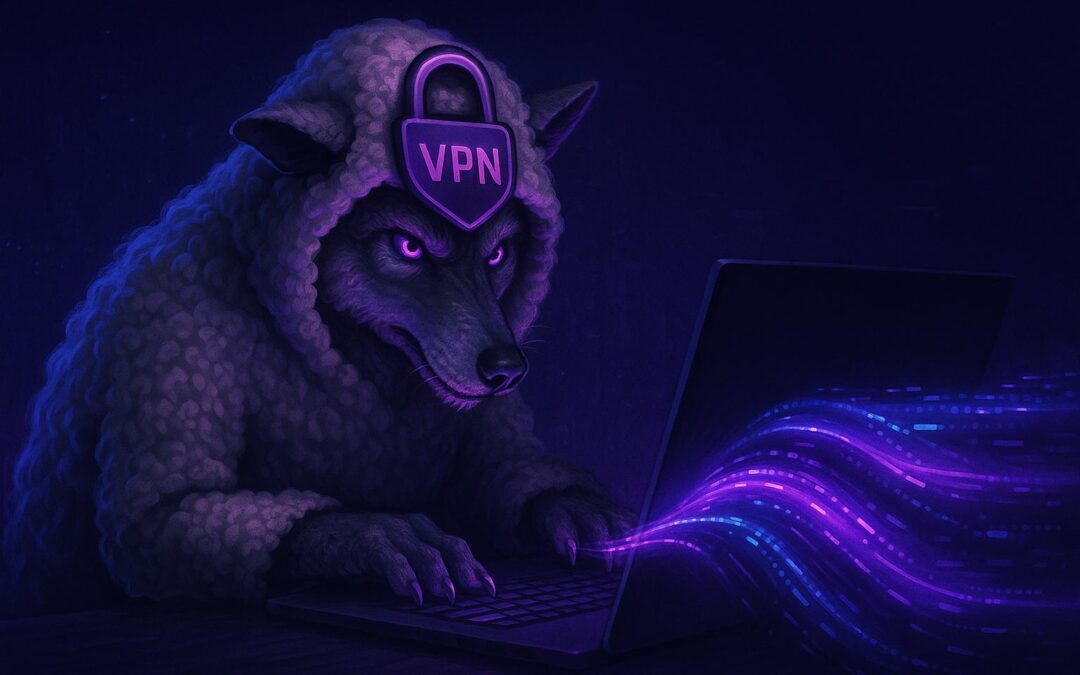
The Great VPN Bamboozle: When Your Digital Bodyguard Becomes the Burglar 🎭
Google’s 2025 Warning About Malicious VPNs Stealing Your Data
Well folks, grab your coffee ☕ and sit down because I’ve got a doozy for you today. Remember when we all thought malicious VPNs stealing user data was just something from a bad sci-fi movie? Yeah, about that… Google just dropped a bombshell that’s got me feeling like I’m watching “Invasion of the Body Snatchers” all over again, except this time it’s your VPN that’s been replaced by an evil twin!
Here’s the kicker: those malicious VPNs stealing user data aren’t just some random apps from sketchy websites. Nope! These hosers are sitting pretty in legitimate app stores, wearing digital disguises better than any Halloween costume you’ve ever seen. It’s like hiring a security guard for your store, only to find out they’ve been copying your keys and raiding your cash register after hours. 🤦♂️
Quick Navigation
The VPN Trust Paradox: When Protection Becomes the Problem
Let me paint you a picture that’ll make your head spin faster than Linda Blair in “The Exorcist.” You know how you lock your doors at night? Well, imagine if your locksmith was actually a burglar in disguise. That’s exactly what’s happening with these malicious VPNs stealing user data in 2025!
Here’s the mind-bender: VPNs (Virtual Private Networks, for those keeping score at home) were supposed to be our digital knights in shining armor. We trusted them with everything – our Netflix passwords, our online banking, that embarrassing Google search about whether hot dogs are sandwiches (they’re not, fight me 😤). But according to recent studies, a whopping 38% of free Android VPN apps contain malware (Source: CSIRO study, 2025). That’s more than one in three, folks!
The paradox is beautifully twisted: the very tool you’re using to hide from Big Brother is actually Big Brother’s evil cousin, taking notes on everything you do. It’s like putting on sunglasses to avoid being recognized, only to find out they’re actually cameras livestreaming your every move to Facebook. #PrivacyFail #TrustIssues
Real-Life Horror Story
I had a client last month – let’s call him Bob (because every story needs a Bob). Bob runs a small accounting firm in Boston, and he was so proud of getting all his employees set up with a free VPN. “Craig,” he said, “I’m protecting my client data like Fort Knox!” Two weeks later, Bob’s calling me at 2 AM because his clients’ tax returns were being sold on the dark web. Turns out, that free VPN was about as protective as a screen door on a submarine.
Red Flags That Your VPN Is Actually a Digital Vampire 🧛♂️
Now, let me share the warning signs that your VPN might be one of these malicious VPNs stealing user data. Think of these as the garlic and holy water of the digital world:
⚠️ The “Too Good to Be True” Red Flag
If a VPN promises “unlimited everything forever for free,” run faster than you would from a zombie apocalypse. These hosers aren’t running a charity – they’re harvesting your data like it’s corn in October. Real VPNs cost money because, surprise surprise, secure servers and encryption aren’t free!
🚨 The Permission Party Crasher
When a VPN asks for permission to access your contacts, camera, or microphone, that’s like a plumber asking to see your jewelry collection. Why would they need that? Spoiler alert: they don’t! Legitimate VPNs need exactly ONE permission: to create a VPN connection. That’s it. Anything else is fishier than a tuna convention.
🗺️ The Mystery Headquarters
If you can’t find where a VPN company is based, or if they’re registered in some place you’ve never heard of (looking at you, mysterious Pacific islands), that’s a bigger red flag than the one Rocky fought Ivan Drago under. Reputable VPNs are transparent about their location and ownership.
The Free VPN Scam: Nothing’s Free Except the Cheese in a Mousetrap 🧀
Let’s talk about free VPNs and why they’re about as trustworthy as a three-dollar bill. You see, running a VPN service costs serious money – we’re talking servers, bandwidth, security experts, the works. So when these malicious VPNs stealing user data offer their services for “free,” you’ve gotta ask yourself: how are they keeping the lights on?
Here’s the dirty little secret: YOU are the product! These hosers are making money by:
- Selling your browsing history to the highest bidder
- Injecting ads into your web pages (yes, even on sites that don’t have ads)
- Using your bandwidth for other people’s activities (congratulations, you’re now part of a botnet!)
- Straight-up stealing your login credentials
According to a 2025 report from Top10VPN, free VPN apps have been caught with their hands in the cookie jar more times than Cookie Monster himself. They found that 85% of free VPNs have concerning privacy policies that allow them to log and share user data (Source: Top10VPN Free VPN Investigation, 2025). #FreeIsntFree #DataTheft
Small Business Vulnerability: When One Bad Apple Spoils the Whole Network 🍎
Now, my fellow business owners, lean in close because this part’s especially for you. Your business is like a medieval castle, and these malicious VPNs stealing user data are the Trojan horses your employees are wheeling right through the front gate!
The Sarah Scenario
Picture this: Sarah from accounting decides to work from Starbucks. She’s smart, she thinks, so she downloads a free VPN to protect the company data. Little does Sarah know, she just gave the keys to the kingdom to some hoser sitting in his mom’s basement halfway around the world. That VPN is now monitoring every spreadsheet, every email, every client record that passes through Sarah’s laptop.
But wait, it gets worse! (Cue dramatic music 🎵) When Sarah connects back to your office network, that compromised VPN can spread faster than gossip at a church potluck. Suddenly, it’s not just Sarah’s data at risk – it’s your entire company’s. Customer credit cards, employee social security numbers, that secret recipe for your famous lobster rolls – all of it’s up for grabs!
💰 The Compliance Nightmare
The compliance nightmare alone should give you the heebie-jeebies. GDPR, CCPA, HIPAA – pick your favorite acronym, they all have massive fines for data breaches. One client of mine got hit with a $50,000 fine because an employee’s personal VPN leaked patient data. That’s a lot of lobster rolls, folks!
Your 5-Minute VPN Security Audit: CSI for Your Digital Life 🔍
Alright, time to channel your inner Columbo and investigate whether your VPN is friend or foe. Here’s your step-by-step guide to spotting these malicious VPNs stealing user data:
Step 1: The Google Search Test (30 seconds)
Google your VPN’s name plus the word “scam” or “malware.” If the first page looks like a crime scene, you’ve got your answer. Real companies have some negative reviews, sure, but they shouldn’t have FBI warnings!
Step 2: The Permission Check (1 minute)
- On Android: Settings > Apps > [Your VPN] > Permissions
- On iPhone: Settings > Privacy > [Check each category]
If your VPN has access to anything besides VPN configuration, uninstall it faster than you’d delete your browser history before lending someone your phone!
Step 3: The DNS Leak Test (2 minutes)
Visit https://dnsleaktest.com while your VPN is on. If you see your real ISP’s servers, your VPN is about as effective as a chocolate teapot. A proper VPN should only show their servers, not yours!
Step 4: The Money Trail (1 minute)
Check how the VPN makes money. If it’s free with no clear business model, you’re the product being sold. Look for transparent pricing, clear privacy policies, and a real company address (not a PO box in the Cayman Islands).
Step 5: The Update Check (30 seconds)
When was the last update? If it’s been more than 6 months, that VPN is more abandoned than a Blockbuster Video store. Security requires constant updates, folks!
The Psychology of Security Theater: Why We Fall for Digital Snake Oil 🎭
Here’s where things get really interesting. We humans are suckers for security theater – anything that makes us feel safe, even if it’s about as protective as a “Beware of Dog” sign when you own a hamster.
These malicious VPNs stealing user data exploit our psychological weaknesses like a Vegas casino exploits gambling addicts. They know we’re scared of hackers (rightfully so!), but they also know most of us don’t understand how VPNs actually work. It’s like selling tiger-repelling rocks in New Hampshire – sure, you don’t see any tigers, but that doesn’t mean the rocks are working!
The hosers behind these scams understand that slapping a padlock icon 🔒 on their app makes our monkey brains go “Ooh, security!” It’s the same reason people feel safer in SUVs even though they’re more likely to roll over than a sedan. The illusion of security is powerful, and these criminals know exactly which buttons to push.
What Google’s Warning Really Means: The Fox Guarding the Henhouse 🦊
Now here’s where I’m gonna get a bit controversial, folks. Google warning us about malicious VPNs stealing user data is like Colonel Sanders warning us about unhealthy eating habits. I mean, come on! This is the same company that tracks everything you do online to sell ads!
Don’t get me wrong – Google’s warning is legit, and you should absolutely pay attention. But let’s not forget that Google makes billions from knowing exactly what you’re doing online. They’re not exactly champions of privacy; they’re more like the jealous ex who doesn’t want anyone else looking at your photos.
The real message here? You need to protect yourself from BOTH the malicious VPNs AND the big tech companies. It’s like being stuck between Darth Vader and the Emperor – neither one’s got your best interests at heart! #PrivacyMatters #TrustNoOne
📬 Stay Ahead of the Hosers!
Get my weekly Insider Notes Newsletter packed with cybersecurity tips, tech insights, and the occasional dad joke (you’ve been warned!)
Your Action Plan: Fort Knox for the Average Joe 🏰
Alright folks, let’s wrap this up with some concrete steps you can take right now to protect yourself from these malicious VPNs stealing user data:
✅ Action 1: Audit Your Current VPN
Run that 5-minute security audit I mentioned. If your VPN fails even one test, delete it like it’s a photo of your ex on Valentine’s Day. For a trustworthy alternative, I recommend ExpressVPN or NordVPN for personal use, or if you’re a business, look into Cisco’s AnyConnect.
👥 Action 2: Educate Your Team
If you’re a business owner, hold a 15-minute meeting this week. Tell your employees about these risks. Make it company policy that only IT-approved VPNs can be used on work devices. Trust me, 15 minutes now saves you from a $50,000 headache later!
🛡️ Action 3: Implement Real Security
- Use https://duo.com for two-factor authentication (way better than SMS!)
- Get everyone on 1Password for password management
- For businesses, set up Cisco Umbrella to block malicious sites
- Keep Windows Defender updated and active
📝 The Bottom Line
Remember folks, in 2025, your digital security is like your health – ignore it, and you’ll pay the price eventually. These malicious VPNs stealing user data are just the tip of the iceberg in a world where every app wants a piece of your digital pie.
Stay safe out there, and remember: just because you’re paranoid doesn’t mean they’re not after your data! 😄
Don’t Let the Hosers Win!
Want to stay ahead of these digital vampires and keep your business safe? Head over to CraigPeterson.com and sign up for my free weekly emails. I’ll keep you updated on the latest threats, share more tips, and maybe throw in a dad joke or two (you’ve been warned!).
#CyberSecurity #VPNSafety #MaliciousVPNs #DataProtection #SmallBusinessSecurity
#PrivacyFirst #TechSafety #DigitalSecurity #2025Security #StayVigilant