
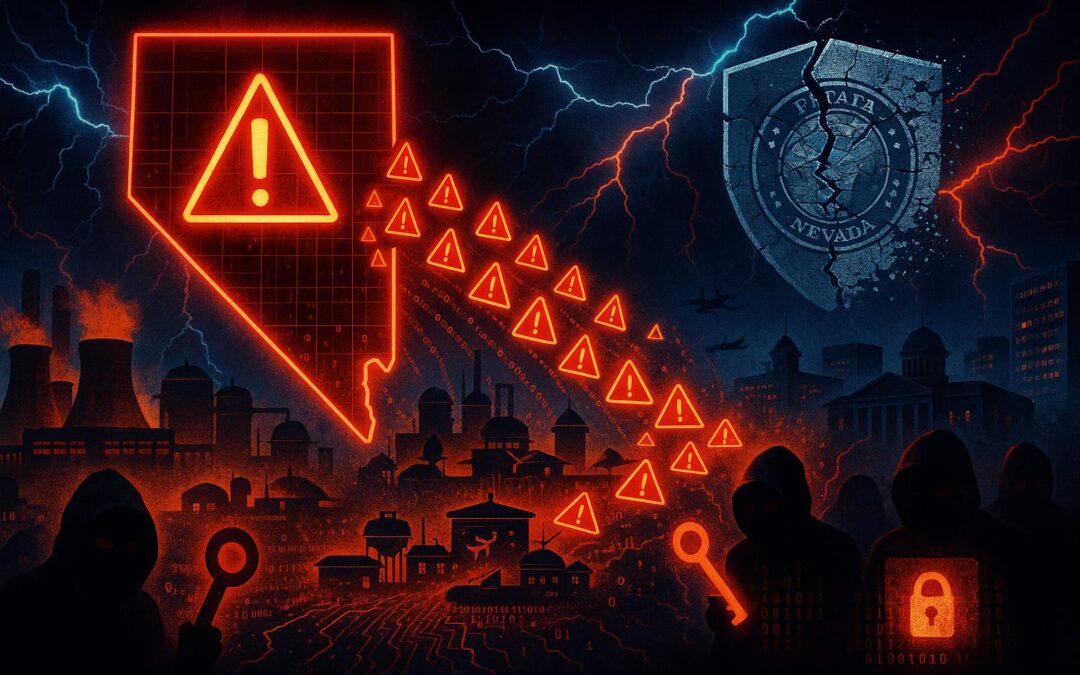
🚨 Nevada’s Ransomware Attack Just Opened Pandora’s Box for Every Infrastructure Worker in America
When Identity Systems Become National Security Nightmares
Folks, remember when we thought ransomware was just about some hoser encrypting files and asking for Bitcoin? 😅 Yeah, those were simpler times. The Nevada government breach isn’t just another “oops, we got hacked” story – it’s a critical infrastructure security crisis that’s about to make every water treatment plant, power grid, and military base in America vulnerable. And Senator Warner’s three-month silence on this? That’s scarier than finding out your favorite disco album got scratched in 1978.
Let me break this down in a way that’ll make you want to check your security faster than you can say “Stayin’ Alive” 🎵.
📋 What We’re Covering Today
When Identity Systems Become the Keys to the Kingdom 🗝️
Here’s what nobody’s telling you about the Nevada breach: Nevada isn’t just a state breach – it’s a national security incident. When you compromise the systems that credential infrastructure workers, you’ve got the keys to the kingdom. Think about it – every power plant operator, water treatment technician, and critical facility employee who got their credentials through Nevada’s system is now a walking, talking security vulnerability.
Remember the movie WarGames? “Shall we play a game?” Well, the hosers behind this attack aren’t playing tic-tac-toe. They’re playing with the identities of people who literally keep our lights on and water flowing. 💡💧
And get this – Warner’s three-month delay in commenting tells me they found something that scared the hell out of them. Politicians don’t wait this long unless lawyers and spooks are involved. When a senator who chairs the Intelligence Committee takes that long to speak up, you know we’re not dealing with your garden-variety ransomware attack.
The Cover Story Nobody’s Buying 🎭
Ransomware is the cover story. The real damage is the critical infrastructure security crisis unfolding right under our noses. Every infrastructure worker credentialed through Nevada is now a potential attack vector. It’s like giving burglars a master key to every house in the neighborhood and then wondering why things keep disappearing.
I’ve seen this movie before, folks. Back in the day, we called it “social engineering,” but now it’s weaponized on steroids. The bad actors aren’t just locking up files anymore – they’re creating a backdoor into every critical system these workers touch.
Think about your own business for a second. You’ve got that one employee who has access to everything, right? Now imagine if their identity was compromised, and someone could waltz into your systems pretending to be them. Multiply that by thousands of infrastructure workers, and you’ve got yourself a recipe for disaster that makes Y2K look like a minor hiccup. 🖥️
Why This Is Our Digital Pearl Harbor Moment ⚡
We’re treating this like a state problem when it’s a national crisis. Nevada’s systems touch federal facilities, military bases, and critical infrastructure across the country. This is our digital Pearl Harbor moment – we just don’t know it yet.
Let me paint you a picture: Nevada credentials workers who maintain systems at:
- Hoover Dam (yeah, that one that powers Vegas and half of California)
- Nellis Air Force Base (where we keep the really cool jets) 🛩️
- Nuclear test sites (I don’t even want to think about this one)
- Water treatment facilities serving millions
When these identity systems get compromised, it’s not just about stolen Social Security numbers. It’s about nation-state actors potentially having legitimate-looking credentials to walk into our most sensitive facilities.
The Partnership That Isn’t Working 🤝
Here’s where it gets really frustrating. The government keeps talking about public-private partnership, but Warner just admitted it’s not working. When 85% of critical infrastructure security is privately owned and they won’t share threat intel, we’re fighting blind against nation-states who see everything.
It’s like trying to play poker when your opponent can see your cards, but you can’t even see your own hand. The private sector holds most of the infrastructure cards, but they’re playing close to the vest because, let’s face it, admitting vulnerabilities is bad for business.
Small business owners, this affects you too! Your local water company, power grid, and internet service provider are all part of this ecosystem. When they get hit, you get hit. Remember the Colonial Pipeline attack? Gas stations ran dry because one company got ransomwared. Now imagine that happening to multiple infrastructure providers simultaneously. 😱
What You Can Do Right Now to Protect Your Business 🛡️
Alright, enough doom and gloom. Let’s talk solutions, because sitting around worrying won’t keep the hosers out of your systems.
1. Implement Zero-Trust Architecture Yesterday
Stop trusting anyone, even your employees. I know it sounds harsh, but in 2025’s #CriticalInfrastructureSecurity landscape, paranoia is just good business sense. Use multi-factor authentication everywhere – and I mean EVERYWHERE.
Skip the SMS codes though; they’re about as secure as a screen door on a submarine. Head over to https://duo.com and get yourself some real 2FA that actually works.
2. Segment Your Networks Like It’s 1979
Remember when we used to physically separate important stuff? Time to bring that back digitally. Create network segments so if one part gets compromised, it doesn’t take down your whole operation. It’s like having fire doors in a building – contain the damage, limit the spread.
For businesses, get yourself on OpenDNS or Cisco Umbrella. They’ll block known bad actors before they even knock on your digital door. And for Pete’s sake, make sure Windows Defender is actually turned on and updated. You’d be surprised how many folks have it disabled because it “slows things down.” You know what really slows things down? Ransomware. 🐌
3. Audit Your Third-Party Access
Every vendor, contractor, and service provider with access to your systems is a potential vulnerability. The Nevada breach shows us that critical infrastructure security isn’t just about your own defenses – it’s about everyone in your supply chain.
Get yourself a password manager like 1Password (not the free ones, folks – you get what you pay for). Create unique, complex passwords for every single service. And change them regularly, especially for anyone who touches your critical systems.
The Uncomfortable Truth About Infrastructure Security 💭
Here’s the thing that keeps me up at night: We’re still treating cybersecurity like it’s an IT problem when it’s a national security emergency. The Nevada breach proves that when you compromise identity infrastructure, you don’t just steal data – you steal trust itself.
Every badge, every credential, every access card issued through compromised systems is now suspect. It’s like finding out someone’s been making copies of your house keys and selling them on the dark web. Except these keys open power plants and water treatment facilities.
The really scary part? Warner’s warning suggests this isn’t just about ransomware payments. When politicians talk about national security implications, they’re seeing intelligence that would make your hair stand up faster than touching a Van de Graaff generator at the science museum.
Moving Forward in a Compromised World 🚀
The Nevada breach is a wake-up call, but are we hitting the snooze button? The critical infrastructure security crisis won’t wait for us to get our act together. Every day we delay is another day the bad actors get to explore their new playground.
Small business owners, you might think you’re too small to matter, but you’re part of the supply chain. You’re connected to bigger fish, and that makes you a target. It’s time to stop thinking about cybersecurity as a cost center and start seeing it as survival insurance.
Remember, the hosers who pulled off the Nevada attack aren’t going away. They’re learning, adapting, and planning their next move. The question is: Will you be ready when they come knocking?
Your Action Plan Starts Now ✅
Don’t wait for the government to save you – they can’t even save themselves right now. Here’s what you need to do TODAY:
The Bottom Line
The Nevada breach shows us that critical infrastructure security isn’t just a government problem – it’s everyone’s problem. When the systems that credential our infrastructure workers get compromised, we’re all at risk.
Don’t be the business that learns these lessons the hard way. The time to act is now, before your name ends up in the next breach notification.
Stay safe out there, folks. The digital world just got a whole lot more dangerous. 🔐
#Cybersecurity #Ransomware #CriticalInfrastructure #NevadaBreach #InfrastructureSecurity #NationalSecurity #SmallBusinessSecurity #ZeroTrust #DigitalPearlHarbor #SecurityFirst